
Beyond the Headlines:
National metrics tell one story. But how did skilled trades professionals respond? We’ve included exclusive Trades ProPulse insights comparing general population performance to blue-collar audience reaction. Scroll down for the Pro perspective.
The 2026 Super Bowl Ad Impact Report reinforces an important truth for marketers: reach still matters, but consideration is what drives meaningful business results. While overall viewership dipped slightly to 57% of the general population, engagement with the event remains strong. Notably, 34% of viewers still cite commercials as their favorite part of the broadcast. The Super Bowl continues to be one of the few cultural moments where advertising itself is part of the entertainment.
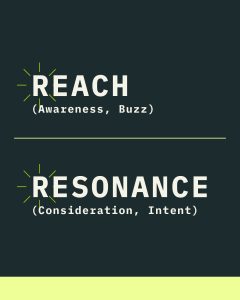
However, performance this year was not defined by awareness alone. YouGov’s Advertiser Impact Score (AIS) weights purchase consideration twice as heavily as awareness or buzz, with the top-performing brands reflecting that shift. Budweiser led with an AIS of 34.4 and a +10.2 lift in consideration. Lay’s followed at 27.0, driven by emotional storytelling that generated a +8.4 lift in purchase intent. Bud Light rounded out the top three with broad metric gains. The common thread across these brands was not shock value or novelty. It was emotional equity, heritage, and brand consistency.
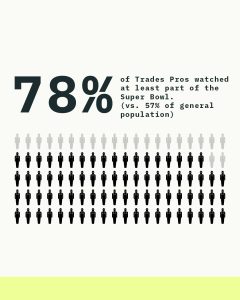
When we compare these national findings with insights from our Trades ProPulse community, the story becomes even more instructive. Among Trades Pros, 78% reported watching at least part of the Super Bowl, and 42% watched most or all of it (which is significantly higher engagement than the general population). That said, commercials were seldom the primary driver of viewership. Nearly half said they watched for the game alone, and only 9% cited commercials as their main reason. Many respondents noted that no ad particularly stood out.
Despite that skepticism, there was meaningful overlap in brand recall. Budweiser and Bud Light were the most frequently mentioned standouts among Trades Pros, with Lay’s also appearing in spontaneous recall. These are the same brands that drove measurable lifts in consideration nationally. That alignment suggests their ads resonated beyond broad awareness and translated across audience segments, including blue-collar professionals who are often more resistant to overproduced or hype-driven campaigns.
Celebrity usage also followed a predictable pattern. Nationally, high-profile appearances drove recall, but recognition did not consistently translate into increased purchase intent. Among Trades Pros, spontaneous mention of celebrities was limited; feedback focused more on brand substance than star power. Additionally, both datasets reflect growing skepticism toward celebrity-heavy creative. While celebrities can amplify reach, they are not a substitute for a compelling brand narrative.
Provocative, competitor-targeting campaigns similarly generated buzz without guaranteeing conversion. Awareness spikes did not automatically produce consideration lift. The distinction is critical: attention alone does not translate to impact.
The broader lesson for marketers is clear. Emotional storytelling, cultural resonance, and brand heritage outperformed spectacle. Campaigns that reinforced existing brand meaning—rather than chasing novelty—were the ones that moved consumers closer to purchase.
In a fragmented media landscape, the Super Bowl remains one of the few true mass-reach moments. But even at that scale, effectiveness is not measured by who generated the most conversation. It is measured by who strengthened intent.
For brands targeting performance-oriented audiences, including skilled trades professionals, authenticity and consistency appear to matter even more. The ads that won in 2026 were not simply memorable. They made consumers more likely to buy, and that remains the metric that ultimately counts.